Your operation requires regular sanitation protocols tailored to specific risks, daily throughput, allergen management, and inspection schedules, including auditable records confirming HACCP requirements, compliance audits, and health department standards. The details below give guidance on sanitation program requirements.
Important Highlights
- Brampton food safety cleaning experts maintain restaurants, grocery departments, commissaries, warehouses, bakeries, schools, mobile vendors, and allergen-sensitive operations.
- Cross-contamination avoidance is achieved by disinfecting frequently contacted areas, food-contact equipment, kitchens, floors, drains, restrooms, and storage areas with compartmentalized approaches.
- Confirmation of approved sanitizer dilution, appropriateness, and exposure duration is performed by certified providers, with conclusion documented using swabs, inspections, and corrective-action records.
- Effective sanitation schedules factor in danger, production volume, transitions, releases, and regulations when distributing daily, recurring, and annual duties by zone.
- Suppliers need to exhibit HACCP, public-health expertise, WHMIS training, insurance, credentials, colour-coded instruments, and audit-ready hygiene paperwork.
Brampton Operations That Need Food Safety Cleaning: Which Ones?
Food safety cleaning is mandatory for any Brampton facility that handles, maintains, prepares, packages, or offers food. Apply it to your operation if it comes under health oversight, food standards, or HACCP systems. This includes eateries, cafes, warehouses, supermarket areas, meat markets, fish stands, convenience outlets, and institutional food areas.
Documented food sanitation is furthermore needed in distribution centers, processing facilities, refrigerated storage, commercial bakeries, school meal programs, event venues, and delivery services. Temporary and mobile businesses count as well, such as food trucks, event vendors, and temporary stalls. Your establishment requires written cleaning standards if your workers prepare supplies, portion completed foods, reheat products, or manage allergen records. In Brampton, cleanliness continues to be not optional; it constitutes legal, operational, and consumer protection compliance.
Which Areas Do Brampton Cleaning Experts Cover?
You need professional cleaners who disinfect frequently contacted areas, kitchens, floors, and restrooms to meet food safety and public health standards. They focus on these spaces because they pose the greatest danger for contamination spread, slipping risks, and sanitation breaches.
By knowing exactly what gets cleaned, you can make sure your facility's cleaning procedures meet compliance standards.
Addressing High-Touch Surface Sanitizing
organize sanitization intervals according to traffic, contamination risk, and operational use.
sample analysis to verify disinfection effectiveness
Kitchen Areas, Floor Surfaces, and Bathroom Spaces
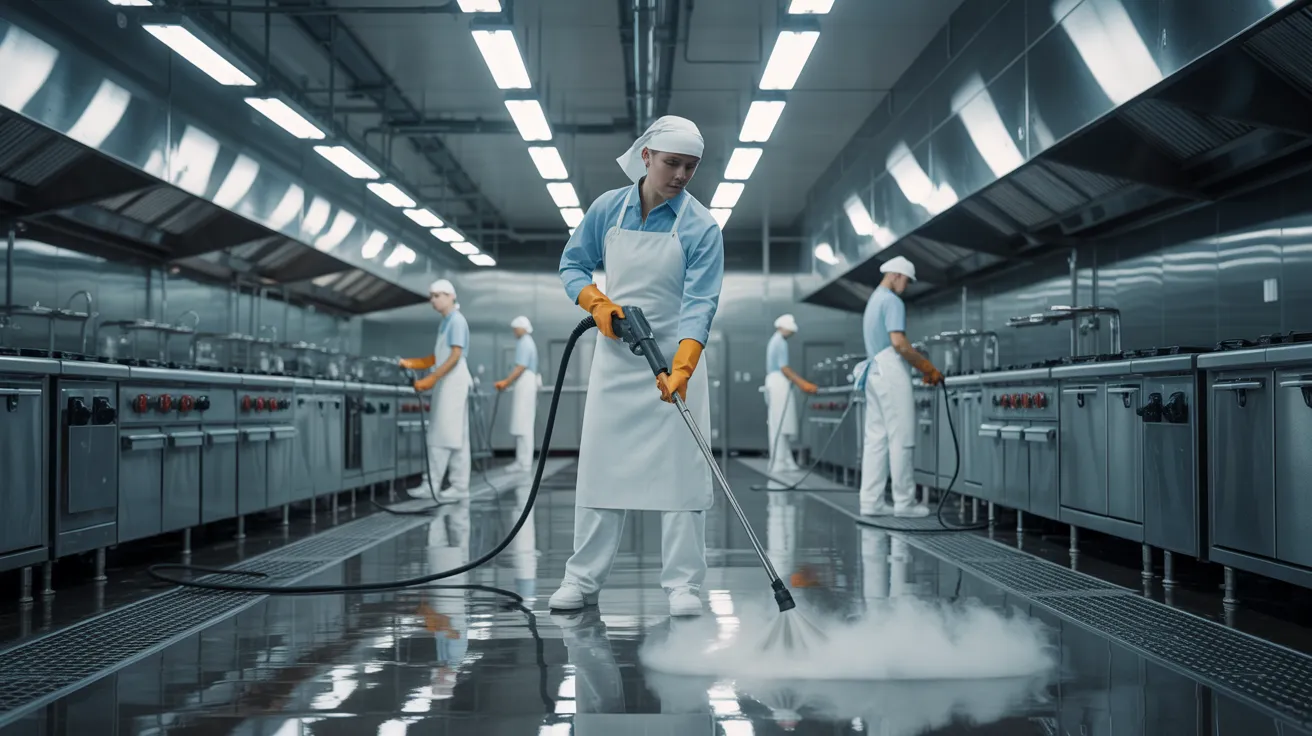
Professional cleaners in Brampton prioritize kitchens, floors, and restrooms given that each location involves distinct food safety, slip-and-fall, and public health requirements. In industrial kitchens, you need degreasing on cook lines, equipment exteriors, drains, prep surfaces, and splash zones to minimize bacterial growth and pest activity.
Professional floor care with documentation is also included. is likewise provided as part of the service.
Restroom sanitation involves disinfecting touchpoints, fixtures, partitions, dispensers, and waste containers, restocking supplies and controlling odours. They also service restaurant moprooms, where chemical storage, sink hygiene, and drainage conditions can affect sanitation compliance and staff safety daily.
Food Safety Cleaning Significance for Brampton Businesses
To comply with regulatory mandates and succeed in audits, Brampton facilities must maintain food-safe cleaning standards. You also minimize cross-contamination by cleaning and sanitizing food-contact surfaces, equipment, and high-touch areas correctly. Most importantly, you help protect community wellness by reducing the chance of food poisoning in your establishment.
Food Safety Regulations
Food businesses in Brampton face rigorous sanitary regulations, making food safety cleaning essential to fulfilling health code requirements, defending patrons, and sidestepping enforcement action. You must maintain sanitary food-contact surfaces, recorded sanitation plans, correct sanitizer application, and auditable operational standards that meet municipal and provincial inspection expectations.
Excellent cleaning standards supports cross-contamination prevention by reducing residue on joint machinery plus frequently touched surfaces. If your cleaning standards slip, you risk citations, remedial directives, reputational damage, and potential service suspension during follow-up inspections or enforcement reviews.
Cross-Contamination Avoidance
Adhering to health code standards requires your skill in preventing cross-contamination throughout routine preparation and sanitation work. You need to isolate uncooked items from finished products, sanitize work stations after each task, and store cleaning supplies separately from food. Structured procedures reduce transfer risks and ensure consistent compliance during inspections.
Building allergen isolation prevents priority allergens from contacting common workstations, storage, or apparatus. Leverage separate cutting boards, colored implements, and precise instrument labeling so team members won't blend products in cooking or serving.Mandate hand cleaning following raw meat, seafood, eggs, or allergen-containing products. Swap wiping cloths regularly, and confirm disinfectant efficacy using test strips. When your team follows these practices each shift, you foster a cleaner, more secure operation that exceeds Brampton's safety standards daily.
Community Health Protection
Should cleaning standards break, you don't simply risk a failed inspection—you expand the odds of contamination-related sickness impacting customers, staff, and the wider Brampton community. You also undermine your responsibility in protecting public health, especially in busy food facilities where pathogens travel quickly through surfaces, equipment, and touchpoints.
You need cleaning protocols that eliminate contaminants, disinfect properly, and verify results. That means following contact times, using approved disinfectants, documenting schedules, and educating employees to meet health-unit expectations. These measures facilitate pathogen reduction by reducing pathogens before they reach food or hands. In Brampton, rigorous cleaning shields at-risk groups, prevents disease spread, and helps you demonstrate proper care. When you maintain proper standards, you don't just meet regulations—you substantially decrease danger and support safer food service citywide.
In What Ways Does Cleaning Help Achieve Food Safety Compliance?
Committing to thorough cleaning protocols secures food safety compliance by reducing contamination risks, controlling pathogen growth, and positioning your facility in accordance with sanitation requirements under HACCP-based programs and public health regulations. You verify that contact surfaces are visibly clean and microbiologically controlled, supporting documented preventive controls and inspection readiness.
Comprehensive cleaning further solidifies allergen mitigation by extracting residues that can cause undeclared allergen exposure. When you combine verified sanitation methods with regulatory training, your staff can execute uniform procedures, use approved chemicals properly, fill out documentation correctly, and handle irregularities before they escalate. Ongoing cleaning facilitates traceability, verifies corrective steps, and proves due diligence throughout audits. Furthermore, it aids you protect product quality, copyright operational compliance, and reduce the chances of compliance actions, market recalls, complaints, and unnecessary safety threats.
When Should You Arrange Commercial Cleaning?
cleaning routines or between production runs wherever surfaces contacting food, restrooms, and high-contact zones
Managing regular tasks independently guarantees improved organization.
What Should You Look For in Brampton Cleaning Experts?
Evaluate providers first by sanitation compliance standards rather than price alone. You must ensure each provider understands CFIA, public health, and HACCP requirements for your business. Request insurance proof, WHMIS compliance, staff training documentation, and supervision methods. Check technician awareness of cross-contamination risks, chemical handling, and traceable sanitation records.
You must also evaluate business consistency and accountability. Seek references from food facilities in Brampton, practical guide then assess response times, corrective processes, and communication quality. Ensure the company supports supplier audits and can provide inspection-ready documentation when authorities or third parties demand verification. Verify equipment care, color-coded items are deployed correctly, and operational-specific risks are understood. A reputable service safeguards compliance, product integrity, and your market standing.
What's covered in a Food Safety Cleaning Plan?
Create a documented strategy that defines every sanitation task, standard, and responsibility before production starts. You should document cleaning schedules, authorized products, mixing ratios, exposure periods, equipment, and testing procedures for each area, section, and machine. Don't forget to add pre-operational inspections, corrective actions, and employee training requirements.
Your strategy should also tackle prevention of contamination, waste management, pest-control tactics, and scheduled records for restrooms, drains, floors, and food-contact areas. Outline how you'll separate raw and ready-to-eat processes, support ingredient tracking, and maintain accurate allergen labeling through validated cleaning between product changes. You should assign accountability, keep signed records, and evaluate results against regulatory standards, HACCP controls, and customer requirements. When gaps appear, update procedures immediately and retrain staff.
Frequently Posed Questions about the Plan
Will sanitation providers handle overnight shifts at Brampton facilities?
Yes, you can arrange cleaning services to support overnight shifts in Brampton facilities. You'll coordinate nighttime cleaning around production schedules, access requirements, and staffing levels. Providers generally create nighttime procedures to reduce interruption, stay compliant, and track completed work. You should verify response times, management, lockout protocols, and waste management before starting service.
Can sanitation professionals handle hazardous incidents?
Yes, you can find Brampton sanitation professionals to offer emergency spill response solutions. They manage hazardous materials, assess risks, isolate affected areas, and begin swift cleanup to reduce exposure and business interruption. You should verify arrival timeframes, professional credentials, PPE protocols, and waste management. If your facility must comply with industry standards, select a service that records events, follows compliant sanitation standards, and enables compliance verification.
Are green disinfectants appropriate for food preparation areas?
Absolutely, eco-friendly disinfectants prove to be secure for surfaces contacting food when you choose products labeled food safe and satisfying regulatory requirements. You must verify application timing, dilution ratios, and rinse requirements before use. Plant based formulas decrease chemical hazards, though you should gather demonstration of efficacy against target microorganisms. For ensuring residue-free conditions, follow manufacturer directions precisely and ensure the disinfecting agent satisfies food industry regulations.
Can sanitation programs be modified for production fluctuations?
Yes, you can tailor maintenance plans for seasonal production changes. You should modify timing, labor allocation, sanitizers, and testing procedures to correspond to production rhythms while upholding regulatory adherence. You'll decrease operational delays by organizing cleaning around line changes, high demand periods, and operational patterns. You should additionally revise standard operating procedures, staff education, and monitoring protocols to reflect transient threats, novel allergens, or elevated soil levels. Regular reviews maintain your program functional.
Do professional cleaning services train employees on sanitation best practices?
Absolutely, commercial cleaners frequently provide employee education on hygiene standards. Your staff receives training on correct chemical handling, dwell times, contamination avoidance, equipment disassembly, and paperwork. They generally match instruction with HACCP, GMP, and CFIA or regional health authority standards. Many conduct health inspections to ensure adherence, pinpoint weaknesses, and reinforce corrective actions. This helps you maintain consistent procedures, pass inspections, and reduce food safety risks consistently.
Summary
Through working with Brampton commercial cleaning and food safety specialists, you do far more than tidy—you ensure your facility for inspections and your standards stay aligned with regulations. From production floors to kitchens, all clean areas and organized zones help prevent pest problems and prevent significant costs. Through booking service on suitable timelines and sticking to a solid cleaning plan, you safeguard employees, clients, and your good name. Within strict regulatory frameworks, proper sanitation cannot be considered optional—they are fundamental to success.